2026.07.17 – Field Trial of Microbial Induced Desaturation (MID) Retreatment for Liquefaction Mitigation of Fine-grained Soils
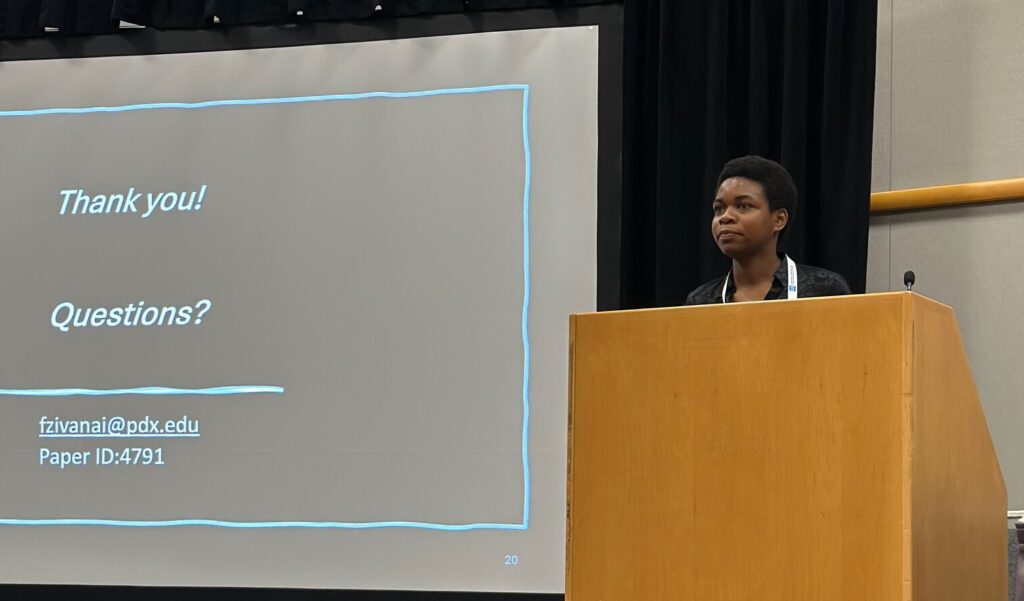
Fadzai presented her research on microbial-induced desaturation (MID) at the Earthquake Engineering Research Institute’s (EERI) 13th National Conference on Earthquake Engineering (13NCEE), focusing on its potential as a non-disruptive solution for mitigating liquefaction risks beneath existing structures. Her talk detailed field-scale retreatment trials at PSU’s liquefiable silt test site near PDX Airport, which was first treated in 2019. By evaluating the site’s multi-year performance, Fadzai highlighted the long-term feasibility and efficacy of MID treatment for sustainable, low-impact seismic mitigation.
2026.07.14 – Managing the Seismic Risk of Fuel Infrastructure: Lessons Learned from Oregon’s CEI Hub
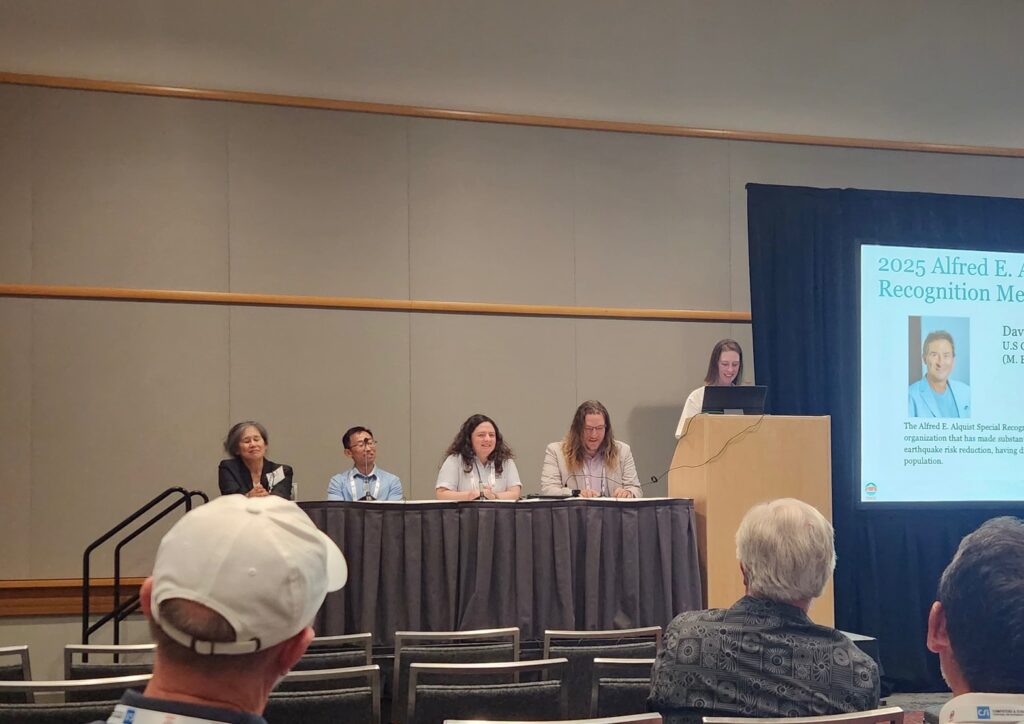
Portland State University faculty and alumni made a strong showing at the Earthquake Engineering Research Institute’s (EERI) 13th National Conference on Earthquake Engineering (13NCEE), hosted right here in Portland, OR. On the second day of the conference, Associate Professor Dr. Diane Moug hosted a special session spotlighting the critical seismic risks and infrastructure challenges facing Northwest Portland’s critical energy infrastructure hub. The session showcased research from across the PSU community. Alumni Ana Tijerina Esquino and Luke Hanst presented on site-specific lateral displacement estimates and risk management practices for large fuel facilities in seismic regions, respectively. PSU faculty also delivered presentations, with Yumei Wang (Senior Advisor, Infrastructure Resilience and Risk) discussing ways to circumvent lifeline system dependencies, and Assistant Professor Dr. David Yang sharing insights on structural risk and fragility curve development for fuel tanks.
2026.06.22 – Microbially Induced Desaturation (MID) presentation for Geology Hour hosted by the Geological Society of Oregon
Fadzai had the great opportunity to present at the Geological Society of the Oregon Country’s Geology Hour show. Attendees learned about the process of introducing chemicals to stimulate microbe activity in subsurface groundwater, which desaturates soil for the purpose of decreasing liquefaction susceptibility. Fadzai’s presentation highlighted the potential for practical MID application as it applies to the Critical Energy Infrastructure (CEI) hub located in NW Portland. The CEI hub is located on reclaimed land, which is highly susceptible to liquefaction.
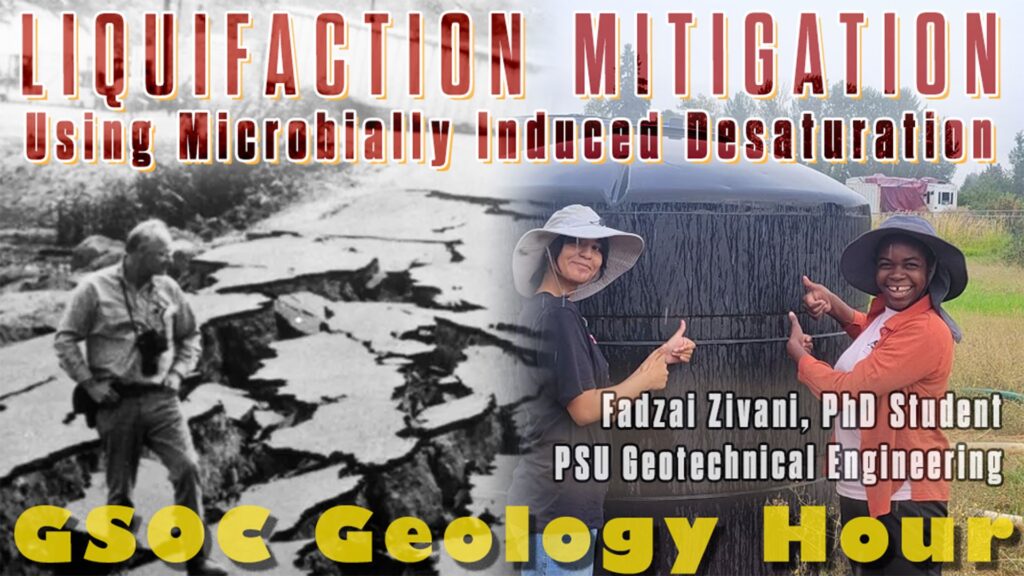
Photo Credit: Geological Society of the Oregon Country
2026.05.01 – EERI Friedman Family Visiting Professionals Lecture
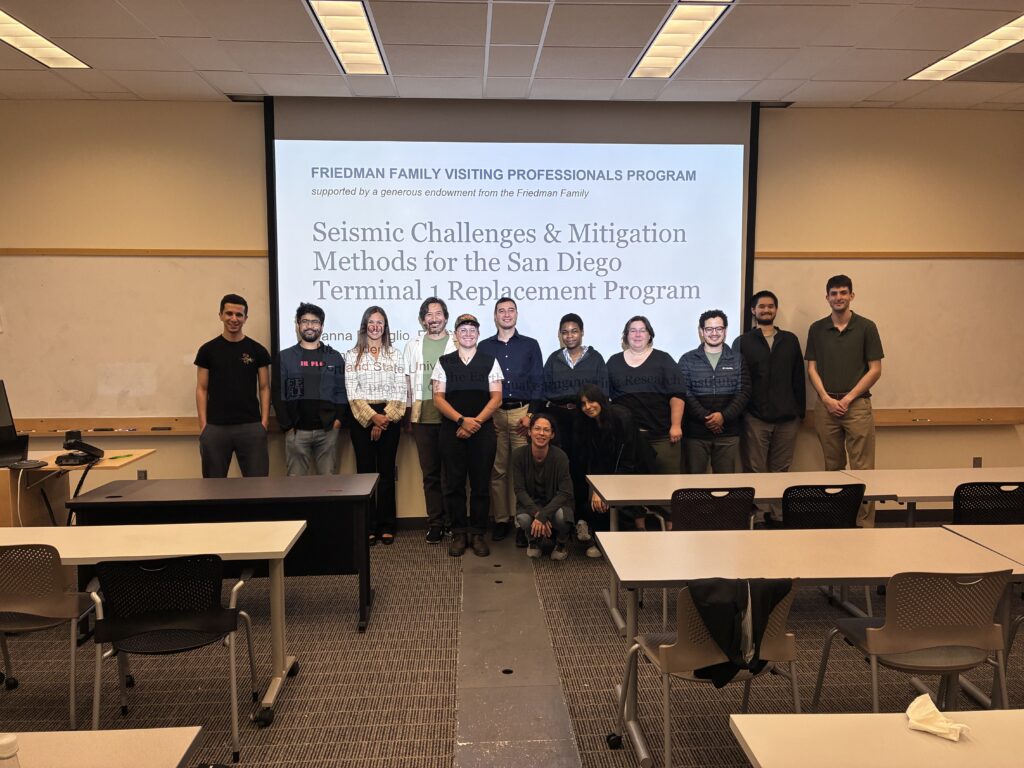
It was a privilege for the PSU Earthquake Engineering Research Institute student chapter in collaboration with GIGSO to host Janna Bonfiglio, MS, PE, GE from Kleinfelder as part of the Friedman Family Visiting Professionals Program. Janna presented on the seismic challenges of the San Diego International Airport’s Terminal One expansion. Seeing the real-world application of geotechnical and structural principles is incredibly motivating for students.
2026.03.11 – Geocongress 2026, Salt Lake City, UT
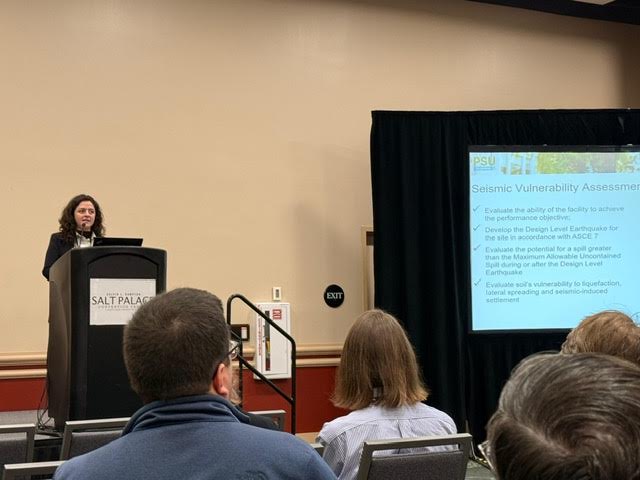
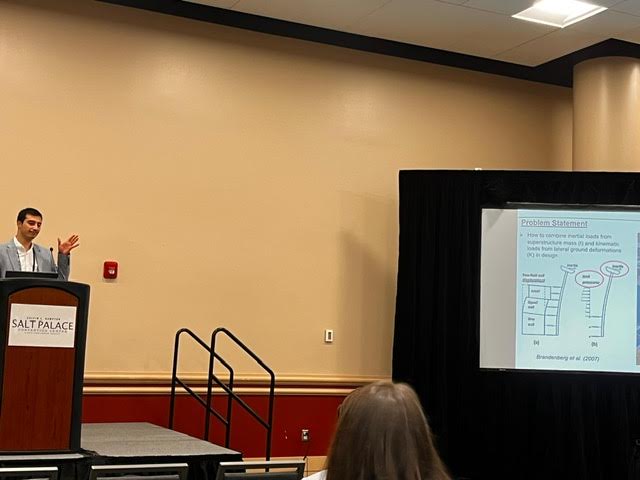
Ana Tijerina Esquino and Benyamin Jalilnavaznovin presented on their respective ongoing research projects at the most recent Geocongress installation. Ana’s presentation discussed comparisons of liquefaction hazard assessment methods with regard to fuel storage facilities, specifically the critical energy infrastructure hub located in NW Portland. Benyamin presented his findings on pile-supported wharf structures when subjected to superstructure inertial and lateral ground deformations, which he tested through a centrifuge model at UC Davis.
2025.05.29 – Oregon ASCE Geotechnical Group Dinner Presenter
Ana Tijerina Esquino presented on Advancing Seismic Resilience of Fuel Storage Infrastructure Through Seismic Vulnerability Assessments at the May meeting the Oregon ASCE-GI group. She has been analyzing data obtained by the Oregon Department of Environmental Quality (DEQ) Fuel Tank Seismic Stability (FTSS) program, highlighting variability in estimate of liquefaction, lateral spreading, and vertical settlements.
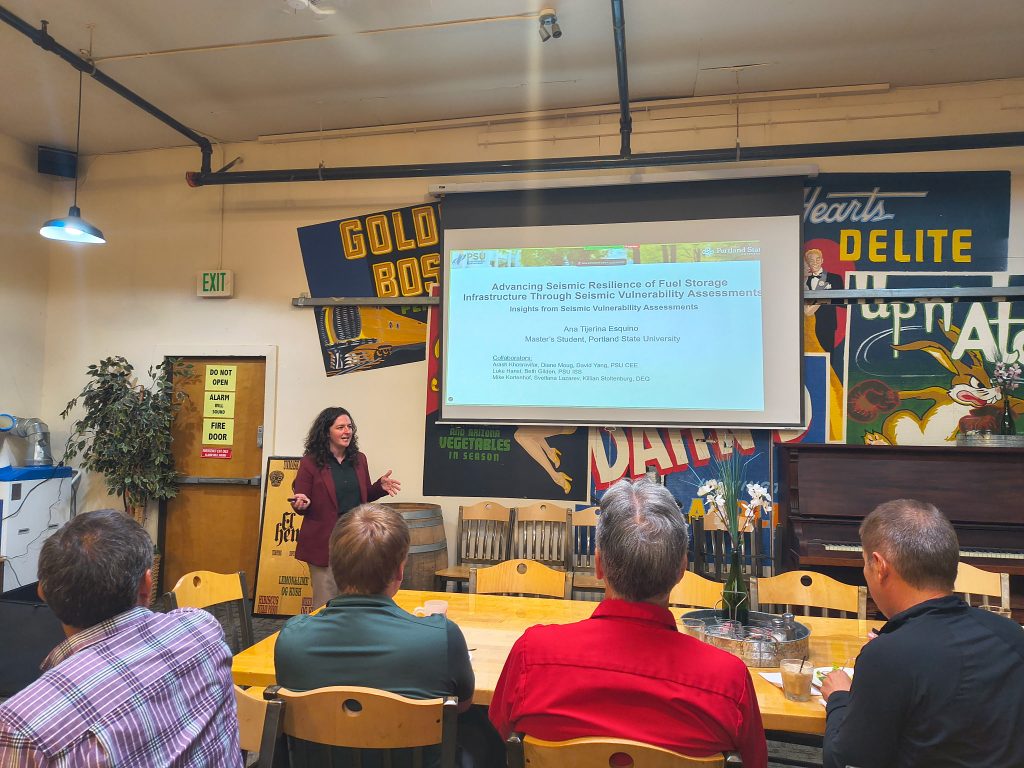
Photo Credit: Robert Schomp
2025.04.23 – Guest Lecturer at Sonoma State University
Kayla Sorenson presented her research to Sonoma State University’s Geography, Environment, and Planning Research Colloquium course. The presentation discussed the topics of liquefaction, mitigation practices, and instances where MID would be preferred over other existing methods.
2025.01.07 – Transportation Research Board
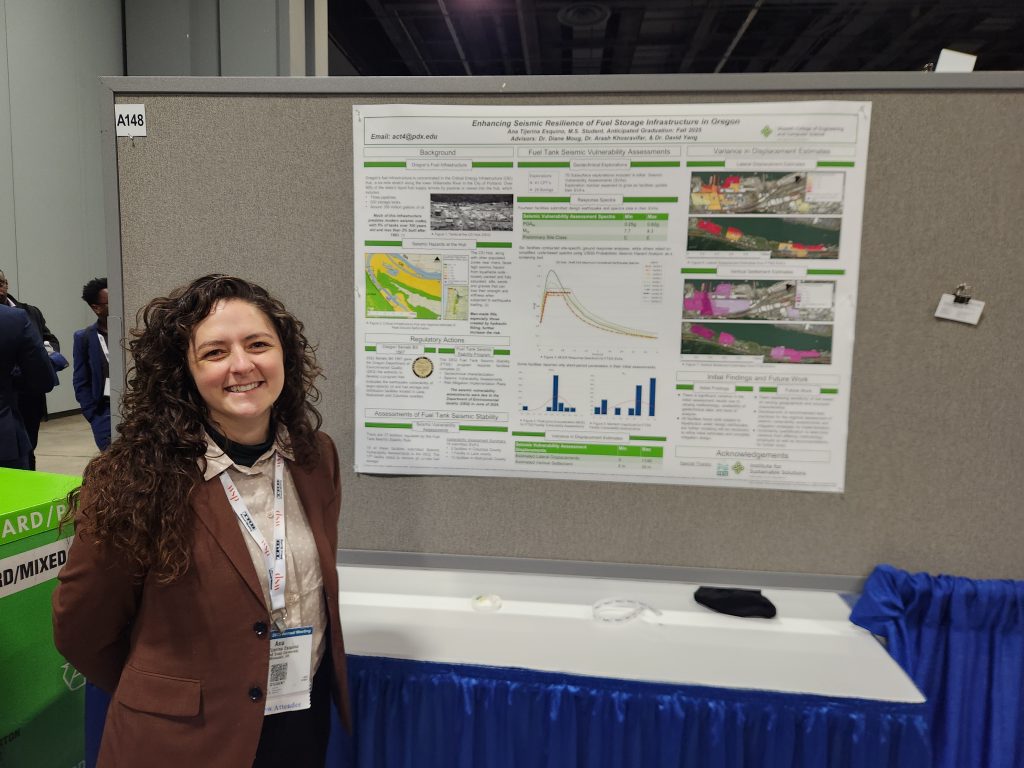
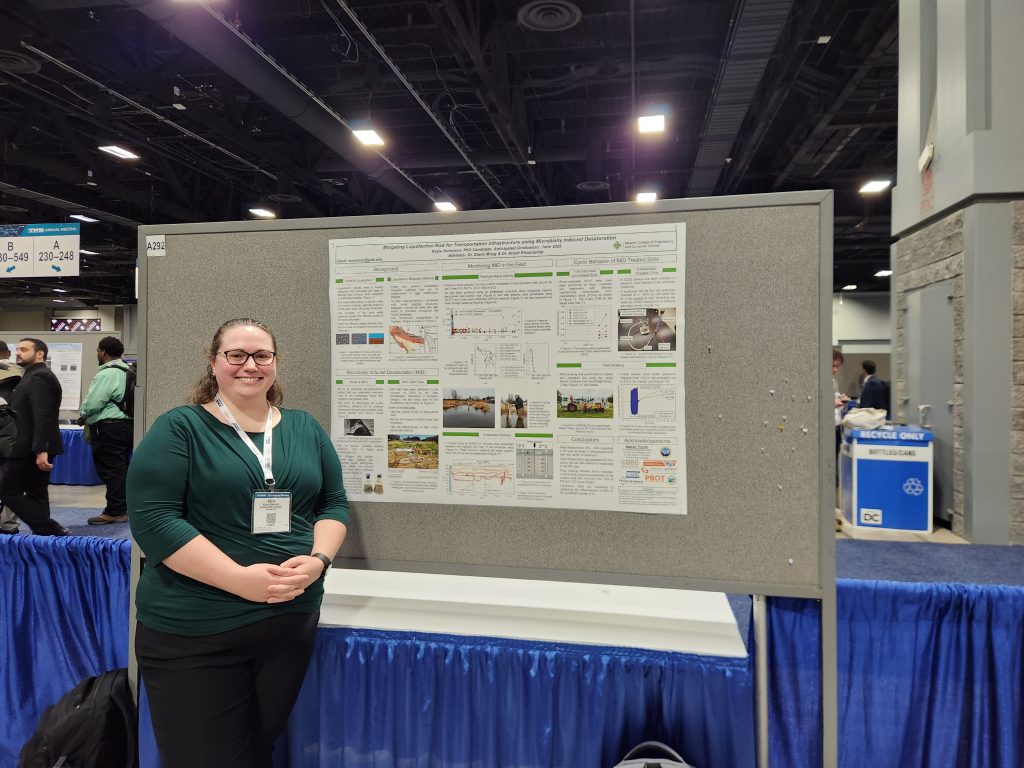
The Dwight David Eisenhower Transportation Fellowship program awarded fellowships to Kayla Sorenson and Ana Tijerina Esquino, and the Transportation Research Board (TRB) invited them to showcase their research at its 2025 Annual Meeting. Additionally, Kayla presented to the TRB Geoseismic Issues in Bridge Design Subcommittee on the longevity and persistence of MID five years after the initial treatment application.
The Transportation Research and Education Center (TREC) asked both students to explain their research and their feelings on being recognized as Eisenhower Fellows: Two Portland State Students Receive Eisenhower Fellowships
2024.08.06 – Oregon’s Infrastructure Report Card
Ana Tijerina Esquino, in her role as Chair of the 2024 ASCE Committee for Oregon’s Infrastructure Report Card, led a team of over 30 engineers in evaluating, documenting, and grading the state of Oregon’s infrastructure. The Infrastructure Report Card that her committee recently published intends to inspire action by citizens and policymakers alike to prepare Oregon not only for the challenges of today, but for those we are certain to face in the future. Ana spoke at the release of the 2024 Oregon Infrastructure Report Card in front of the Oregon State Capitol.
2024 Oregon Infrastructure Report Card
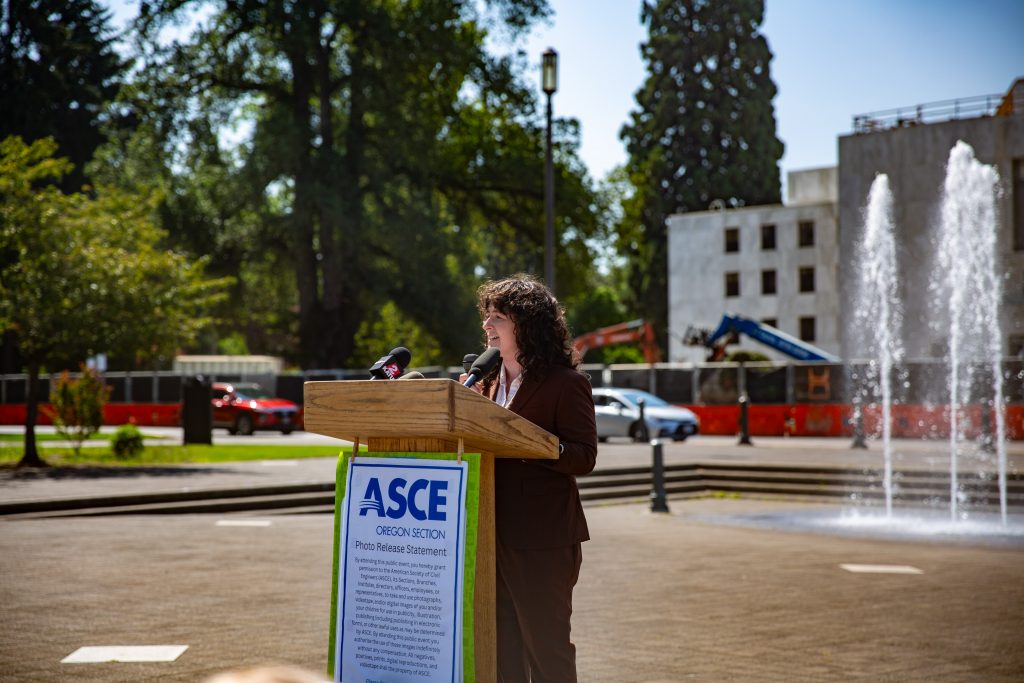
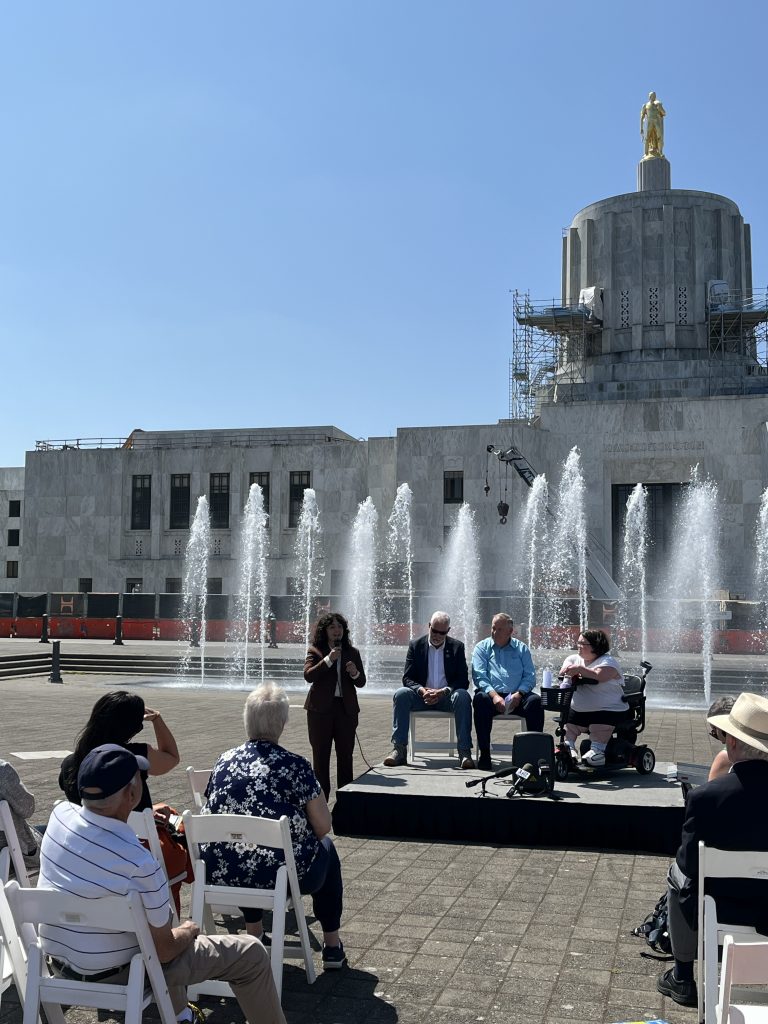
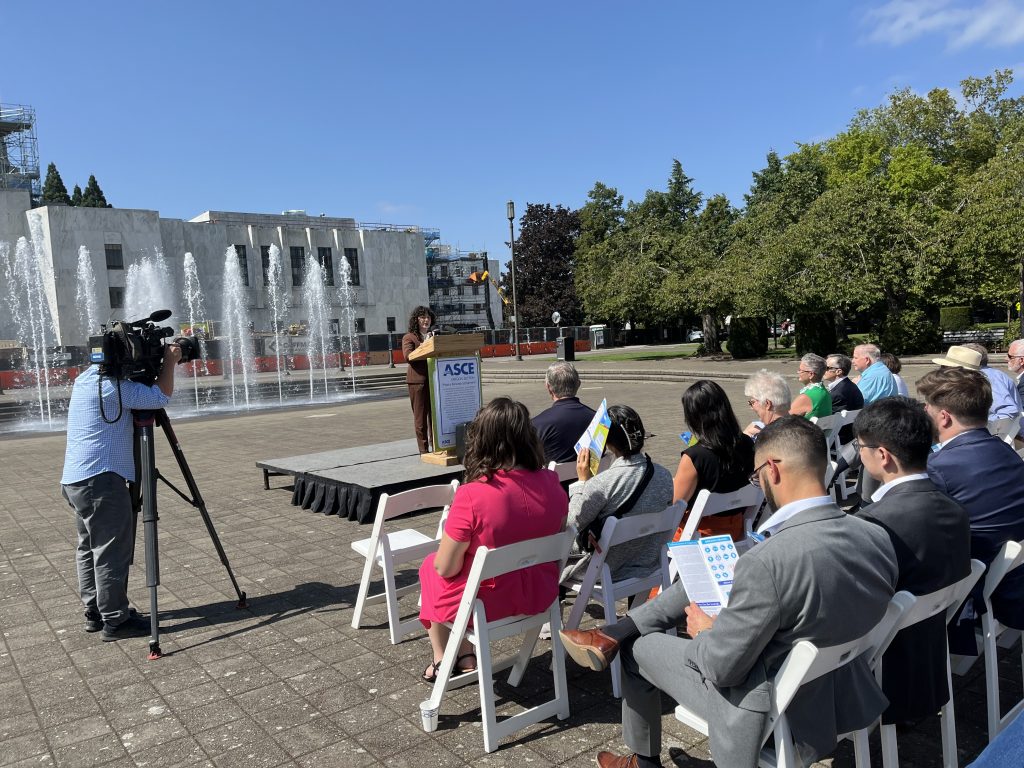
Photo Credit: Chris Knight